ALL AMERICAN BRUH: An Embroidery Designer's Take
When I first opened the ALL AMERICAN BRUH design, I immediately recognized the kind of graphic that speaks a very specific language. It has a bold, unapologetic personality that doesn't try to please everyone, and honestly, that is exactly what makes it work for the right customer. As someone who has spent years testing artwork for embroidery conversion, I have learned to spot designs that will hold up under thread, stabilizer, and repeated washing. This one has a lot going for it, but like any design, it rewards a thoughtful approach.
The files you receive are clean and production-ready in the graphic sense. The high-resolution PNG at 300 DPI with a transparent background gives you immediate flexibility for mockups. The SVG and EPS files are fully vector and editable, which means scaling up or down without losing crispness is genuinely possible. The DXF file adds another layer of utility for anyone working with cutting machines or hybrid workflows. That said, if you are strictly an embroidery designer, you will need to understand what these files actually give you and what they do not. These are graphics, not pre-digitized embroidery files. You will need to digitize the artwork yourself or send it to a digitizer before any needle touches fabric. I appreciate when a product description is clear about this, and here it is straightforward.
The Mood and Personality of ALL AMERICAN BRUH
Some designs are quiet and ornamental. The ALL AMERICAN BRUH is neither. There is a casual confidence in the composition that reads as playful, slightly cheeky, and rooted in a kind of patriotic humor that resonates strongly with a particular buyer. I can picture this on a crewneck sweatshirt at a backyard barbecue, stitched onto a cap at a tailgate, or even worked into a tongue-in-cheek kitchen towel for someone with a good sense of humor. The design does not take itself too seriously, and that relaxed energy is exactly what makes it commercially viable for small shops and craft businesses.
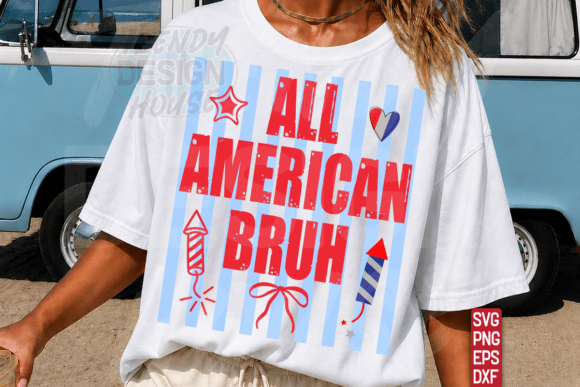
Visually, the layout feels balanced without being stiff. The typography carries the weight of the message, and any decorative elements sit in a supporting role rather than competing for attention. From an embroidery perspective, that is good news. Type-heavy designs often translate well to stitch when the letterforms are bold enough to hold their shape. Thin or overly intricate lettering can disappear into fabric texture, but the weight here looks substantial enough to digitize with confidence. I always recommend examining the smallest details at actual embroidery size before committing to a final stitch-out, and this design would benefit from that same careful check.
Imagining ALL AMERICAN BRUH on a Finished Product
Let me walk through a realistic scenario. One of my repeat customers recently asked for something humorous and distinctly American-themed for a set of custom tote bags she was gifting to friends at a reunion. She wanted something that felt personal but not overly sentimental, something that would get a laugh but still look like a quality handmade item. I thought of a design very much like the ALL AMERICAN BRUH graphic. The bold text and straightforward theme would stitch out beautifully on a sturdy canvas tote, especially with a navy blue thread on a natural beige fabric. The contrast would be sharp, the message instantly readable, and the overall product would feel intentional rather than slapped together.
That same logic applies to sweatshirts. A white or light gray sweatshirt with this design stitched in red, white, and blue thread would have immediate shelf appeal at a craft fair or in an Etsy listing. I also think of caps, particularly unstructured dad hats, where the low profile of the front panel gives a nice flat surface for a design like this. On a curved brim or deeply structured hat, you would need to test placement carefully because the lettering span could distort if not adjusted for the surface curve. That is not a flaw in the design, just a practical reality of embroidering on headwear.
Practical Embroidery Considerations That Matter
Before you fire up the machine, there are a few things worth testing. The first is hoop size. Depending on how large you want the finished design to appear on a shirt, tote, or pillow cover, you need to confirm that the scaled artwork fits comfortably within the embroidery field of your hoop. If you are working with a single-needle machine that maxes out at a 4x4 inch field, you might need to resize downward, and that is where you check whether any small details become too tight for clean stitching.
Stitch density is another factor you will control during digitizing, but your choices should be informed by the fabric. On a thick sweatshirt fleece, a dense satin stitch can sink in and lose definition unless you use a solid underlay and the right stabilizer. On a thin cotton t-shirt, too much density creates puckering. I have learned to test on scrap fabric that matches the final product weight, and I recommend the same habit to anyone working with a new design. The ALL AMERICAN BRUH artwork, with its bold shapes, gives you room to adjust stitch types without losing the design's character. That flexibility is a real advantage during digitizing.
Where to Be Extra Careful With This Design
Not every product is a perfect home for this graphic. Stretchy fabrics like performance wear or ribbed knit can warp the lettering if you do not use a cutaway stabilizer and a basting stitch. I would avoid placing the ALL AMERICAN BRUH design on heavily textured fabrics like waffle weave or thick terry cloth unless you are comfortable with a softer, less crisp stitch appearance. Dark fabrics introduce their own challenge. The design's visibility depends entirely on thread color choices, so if you are stitching on a black hoodie, you need light or bright thread colors that pop. I test thread palettes on a fabric swatch before committing to a production run, especially when selling finished items where consistency matters.
Small hoop sizes deserve a special mention. If you shrink the design too far to fit a compact hoop, watch for any fine interior details closing up during stitching. The rule of thumb I follow is to run a quick sew-out at the intended final size and examine it under good light. If the smallest elements read clearly, you are in good shape. If they blur together, you either need to simplify the digitizing or increase the overall size. The ALL AMERICAN BRUH graphic appears to be designed with enough breathing room that moderate resizing should not cause immediate problems, but testing reveals what theory cannot.
Thread, Color, and Visual Impact
Color choices will make or break how customers react to this design. A classic red, white, and blue palette feels obvious for the theme and will attract buyers drawn to patriotic aesthetics. However, I would also encourage experimenting with unexpected combinations. A single-color version in gold on a deep green tote bag changes the mood entirely and makes the product feel more boutique than novelty. A monochrome charcoal gray version on a heather gray sweatshirt gives a modern, understated look that appeals to a different audience. The ALL AMERICAN BRUH graphic does not lock you into one color story, and that versatility expands the range of products and listings you can build around it.
Thread texture contributes to perceived quality. A smooth satin stitch finish signals professionalism to a buyer scrolling through Etsy photos. A poorly tensioned fill stitch signals the opposite. When I prepare a design for sale, I photograph the finished stitch-out in natural light and from multiple angles so the online listing accurately represents what the customer will receive. That practice builds trust, reduces returns, and makes the handmade product feel premium.
Commercial Use and Licensing Awareness
If you are selling finished items made with the ALL AMERICAN BRUH design, you need to confirm the license terms included with your purchase. Many graphic bundles come with personal use only, while others grant a commercial license for physical products with certain limitations. I do not see full license details spelled out in the provided product description, so my advice is to check before listing anything for sale. As an embroidery business owner, I keep a folder of license documentation for every design asset I use commercially. It protects me and shows respect for the original designer's work.
For those selling digital mockups or using this design in printables, the same licensing diligence applies. The editable vector files open up a lot of creative possibilities beyond embroidery, including vinyl cutting, screen printing, and sublimation. Knowing the boundaries of what you can legally do with the files protects your business reputation and keeps your shop operating smoothly.
What the Graphic Files Actually Deliver for Embroidery Workflows
The inclusion of a high-resolution PNG with a transparent background makes mockup creation straightforward. You can drop the ALL AMERICAN BRUH graphic onto a digital photo of a blank tote bag, sweatshirt, or cap and present a polished preview to your customer before you ever stitch a single thread. For Etsy sellers and small shop owners, that kind of visual presentation directly impacts conversion rates. The SVG and EPS files give you precision when resizing or modifying the artwork before digitizing, which is helpful if you need to simplify small details for cleaner stitch performance. The DXF file extends the design's usefulness to cutting machine projects, which broadens the types of products you can create from a single purchase.
One honest note from an embroidery designer's perspective. These are not embroidery-specific file formats like PES, DST, EXP, or JEF. That does not diminish the value of the artwork, but it does mean the conversion step is on you. If you are new to digitizing, set aside time to learn how the letterforms and shapes translate to stitch objects. If you outsource digitizing, send the vector files along with notes on your intended size, fabric type, and thread preferences. Clear communication with your digitizer results in better stitch-outs and fewer wasted blanks.
Real Products, Real Reactions
I think about customer psychology a lot when evaluating a design. The ALL AMERICAN BRUH graphic triggers an immediate emotional reaction. It is humorous, it is bold, and it carries a certain cultural shorthand that resonates with a specific audience. Someone buying this on a t-shirt or tote bag is not looking for subtlety. They want something that communicates personality quickly and unapologetically. That makes the design a strong candidate for gift items, event merchandise, and lifestyle products where attitude matters.
At the same time, I recognize that this design is not for every shop. If your handmade brand leans toward delicate, floral, or minimalist aesthetics, the ALL AMERICAN BRUH might feel out of place. But if your product line includes humorous, patriotic, or boldly casual pieces, this design fits right in. Knowing your customer base matters as much as knowing your stitch quality. I would feel confident stocking this on a range of products for a summer product line, a holiday weekend promotion, or a patriotic-themed boutique collection.
Testing and Refining Before You Sell
Every experienced embroiderer learns the same lesson eventually. Never sell a design without stitching it out first. For the ALL AMERICAN BRUH graphic, I recommend testing on a fabric that closely matches your intended production material. Cotton canvas for totes, fleece for sweatshirts, and woven cotton for pillow covers all behave differently under needle and thread. Pay attention to how the lettering holds up after a wash cycle. Check for thread breaks, registration shifts, and any loss of clarity at the edges. Those small adjustments in digitizing and stabilizer choice separate a professional product from an amateur one.
I also recommend photographing the test stitch-out on the actual product type you plan to sell. A flat lay photo on a white background works for Etsy thumbnails, but lifestyle images showing the embroidered item in use create stronger buyer engagement. A photo of a tote bag with the ALL AMERICAN BRUH design slung over a shoulder or sitting on a picnic table tells a story that a flat scan cannot. That storytelling drives sales, and the quality of the embroidery needs to hold up to close inspection when a customer receives the product.
Final Practical Judgment
Working with the ALL AMERICAN BRUH design feels like a straightforward, commercially smart choice for the right niche. The artwork provides enough detail to feel finished without being so complex that it becomes a digitizing headache. The file formats cover a wide range of design and production workflows, which adds value for multi-discipline makers. The theme has built-in marketability for patriotic holidays, summer events, casual gifts, and lifestyle merchandise. You still need to bring your embroidery expertise to the process. Checking stitch density, matching thread colors to fabric, selecting the right stabilizer, and testing wash durability are all part of turning a good graphic into a great embroidered product. If you do those things, the design delivers exactly what it promises.
For craft business owners, Etsy sellers, and apparel decorators looking for a design with personality and broad seasonal appeal, adding the ALL AMERICAN BRUH to your design library is a practical move. Just confirm your licensing, run your tests, and let the needle do the rest.